
A Bucovina Monasteries Tour Worth Your Day
06/09/2026
6 Custom Tour Examples for a Bucovina Trip
08/09/2026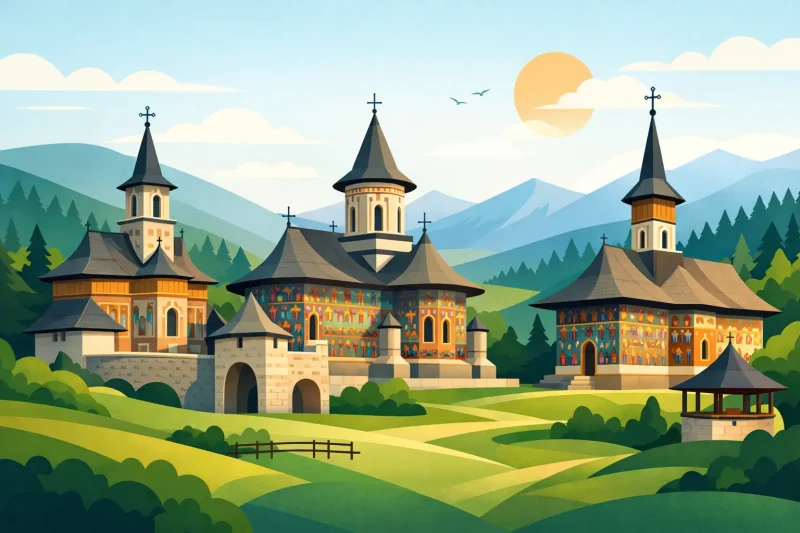
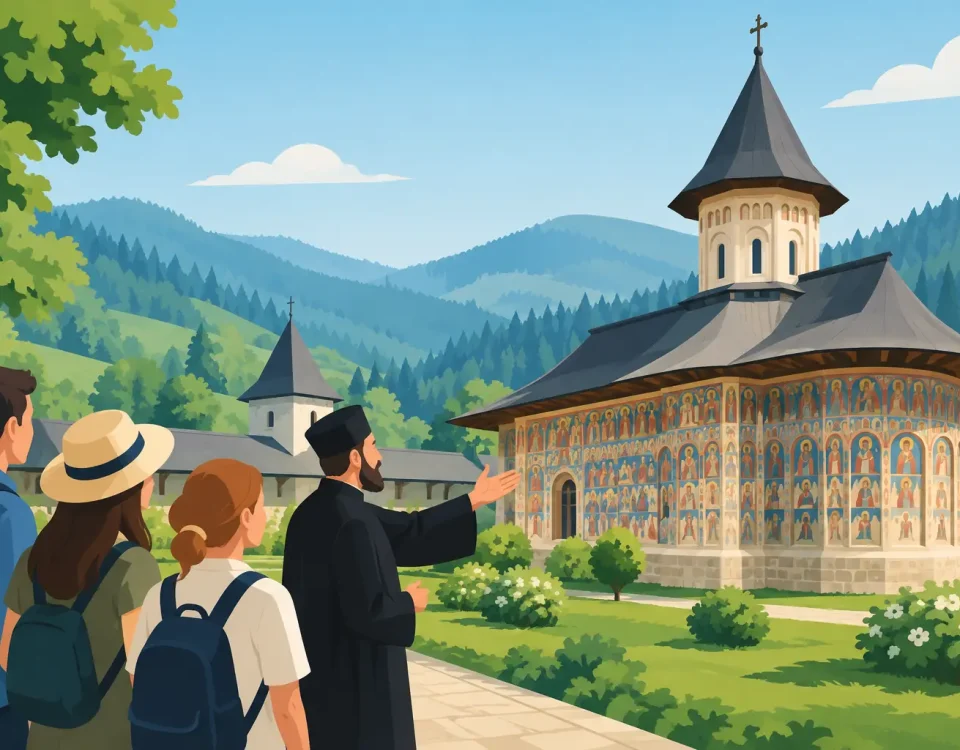
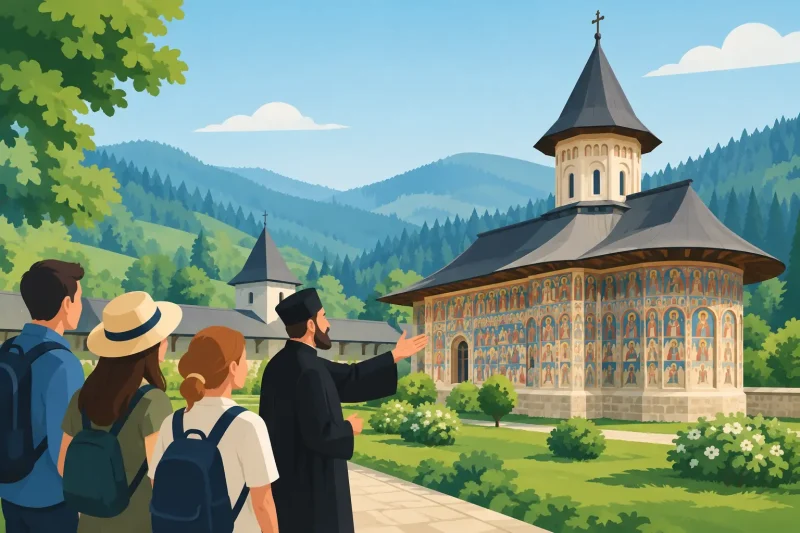
The painted churches of northern Romania are not simply beautiful stops on a road trip. At the Bucovina monasteries UNESCO sites, the exterior walls themselves tell biblical stories in intense blues, reds, greens, and golds, created for communities that learned faith through images as much as through words. Set among wooded hills, village lanes, and traditional homes, these churches offer one of Europe’s most distinctive cultural landscapes.
For travelers based in Suceava or crossing northern Romania, the real reward is taking time to understand what each monastery represents. Some are famous for a single unforgettable fresco. Others reveal quieter details: a fortified enclosure, a delicate stone doorway, a rare scene of the Last Judgment, or the rhythm of monastic life that continues within the walls.
What UNESCO Recognizes in Bucovina
The UNESCO World Heritage property is officially known as the Churches of Moldavia. It includes eight churches built between the late 15th and late 16th centuries, during a period when the Principality of Moldavia was asserting both its Orthodox identity and its artistic confidence.
Their exceptional feature is the extensive exterior fresco painting. In most European churches of the period, painted cycles were protected inside. Here, painters covered entire facades with theological scenes visible to villagers, pilgrims, and travelers. The paintings were not decoration alone. They were teaching, memory, and public devotion expressed in color.
The eight UNESCO-listed churches are:
- Church of the Beheading of Saint John the Baptist, Arbore
- Church of the Assumption of the Virgin, Humor
- Church of Saint Nicholas, Pătrăuți
- Church of Saint Nicholas, Probota
- Church of Saint George, Suceava
- Church of the Annunciation, Moldovița
- Church of the Resurrection, Sucevița
- Church of Saint George, Voroneț
This distinction matters when planning a trip. Putna and Dragomirna are essential Bucovina monasteries and deeply meaningful places to visit, but they are not part of the UNESCO inscription. A well-designed cultural itinerary often combines the UNESCO churches with these major monasteries to tell a fuller story of the region.
The Bucovina Monasteries UNESCO Route: The Essential Stops
Voroneț: the famous blue and the Last Judgment
Voroneț is the monastery most visitors recognize first, largely because of the celebrated shade often called Voroneț blue. The church was founded by Stephen the Great in 1488, and its exterior frescoes were added decades later. The western wall is especially powerful: its vast Last Judgment scene remains remarkably vivid and complex.
Visit Voroneț early or later in the afternoon if possible. It is a popular stop, and quieter moments make it easier to look beyond the famous blue to the faces, gestures, angels, saints, and visual order of the composition. The church is small, so a short visit can feel rushed unless your schedule leaves room to pause.
Humor: expressive scenes in warm color
Humor Monastery, near Gura Humorului, has a more intimate scale and a particularly warm palette. Founded in 1530, it is known for its red-toned frescoes and its representation of the Siege of Constantinople, a recurring image in Moldavian religious art.
Unlike several other monasteries, Humor does not have a tall defensive tower. Its architecture and setting feel more open, while the paintings remain rich in detail. It pairs naturally with Voroneț on a day tour because the two sites are close enough to visit without turning the day into a long drive.
Moldovița: grandeur, fortification, and narrative painting
Moldovița combines monumental frescoes with a strong sense of place. Located near Vatra Moldoviței, it is surrounded by a protective enclosure that immediately changes the atmosphere of the visit. The church dates from 1532 and preserves one of the most striking exterior fresco programs in Bucovina.
Look for the Siege of Constantinople and the Tree of Jesse, both painted with extraordinary confidence. Moldovița is often best appreciated after visiting a smaller church, when its scale and dense visual storytelling become even more apparent. The road from Suceava takes time, but the journey through villages and valleys is part of the experience.
Sucevița: a late masterpiece in green
Sucevița is one of the best-preserved painted monasteries and one of the most complete experiences for travelers. Built in the late 16th century, it has high defensive walls, towers, a spacious courtyard, and frescoes that cover much of the church exterior.
Its Ladder of Divine Ascent is among the defining images of the entire UNESCO ensemble. Monks climb toward heaven while demons attempt to pull some away, creating a scene that is both theological and remarkably human. Sucevița’s dominant green tones distinguish it from Voroneț’s blue and Humor’s warmer hues.
Because it lies farther north, Sucevița works particularly well on a full-day route that also includes Moldovița. Add Putna if you want to focus on Moldavian history and the legacy of Stephen the Great, but expect a longer day with more driving.
The Lesser-Known UNESCO Churches Are Worth the Detour
The most photographed monasteries are not the whole story. Travelers with a deeper interest in art, architecture, or medieval history should make room for the other UNESCO churches.
Arbore is admired for its elegant proportions and unusual lack of a bell tower. Its frescoes have a refined, decorative quality, and the church’s setting feels peaceful and rural. Pătrăuți is the oldest of the listed churches, founded in 1487, and is especially valued for its rare fresco of the Cavalcade of the Holy Cross.
Probota, near Dolhasca, stands within a fortified monastic complex and offers a more contemplative visit away from the busiest tourist circuit. The Church of Saint George in Suceava, part of the Saint John the New Monastery, is especially convenient for visitors staying in the city. It provides an excellent introduction before traveling into the countryside.
These places are geographically dispersed, which is precisely why local planning matters. Trying to see all eight in one day would reduce extraordinary monuments to quick photo stops. Two or three churches in a day is usually a better pace, depending on starting point, season, road conditions, and how much historical context you want along the way.
How to Plan a Meaningful Visit
Start with Suceava, Gura Humorului, or Vatra Dornei, depending on your broader itinerary. Suceava is practical for arriving by train, road, or air and gives easy access to the city’s UNESCO church, museums, and routes toward the major monastery clusters.
For a first visit, a day including Voroneț, Humor, and Moldovița offers variety without excessive travel. A second day can focus on Sucevița, Putna, and nearby village landscapes. If you have three or more days, add Arbore, Pătrăuți, Probota, and Saint John the New in Suceava, then combine the cultural route with the Rarău Mountains, the Mocănița steam train, or a traditional craft workshop.
A private guided itinerary is especially useful for the more dispersed sites. Public transport can connect some towns, but it is rarely efficient for visiting multiple monasteries on the same day. A guide-driver also helps turn painted walls into a coherent story, rather than a sequence of names and dates. AXA Travel can organize routes from Suceava with comfortable transport and a local licensed guide, adjusted for couples, families, and small private groups.
Practical Etiquette and Timing
These are active religious sites, not museum rooms. Modest clothing is appropriate, and women may be asked to cover their heads at certain monasteries. Photography rules vary, especially inside churches, so follow posted guidance and ask before taking images. Speak quietly in courtyards and avoid entering services unless you are prepared to participate respectfully.
Late spring to early autumn offers the easiest driving conditions and the richest surrounding scenery. Summer brings longer days and more visitors, while September often offers pleasant temperatures and quieter monastery courtyards. Winter visits can be beautiful, especially under the snow, but daylight is shorter and mountain roads may require more careful planning.
The most memorable Bucovina monastery visits happen when the route leaves space for more than photographs: a painted wall studied in silence, a conversation with a local guide, a village meal after the church gates close behind you. That unhurried attention is what allows these UNESCO sites to feel less like monuments on a checklist and more like living pages of Bucovina’s history.