
How to Plan a Private Bucovina Tour Your Way
05/09/2026
Bucovina Monasteries UNESCO Sites to See
07/09/2026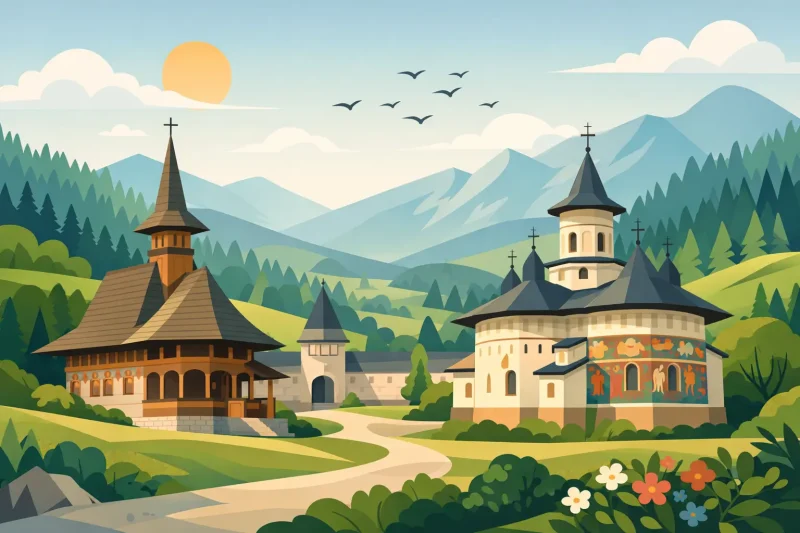
The blue of Voroneț is not simply a famous color on a church wall. Seen in person, against the green hills and wooden gates of Bucovina, it becomes part of a larger story of faith, art, and village life. That is what makes a Bucovina monasteries tour worth your day: not ticking off churches, but understanding why these painted places still matter to the people who live around them.
A well-planned day from Suceava can bring together some of Romania’s most remarkable cultural landmarks without turning the journey into a race. The roads lead through quiet communities, rolling farmland, and mountain foothills, while each stop adds a different chapter to the history of medieval Moldavia. For first-time visitors, the right route provides essential context. For returning travelers, it reveals details that are easy to miss on a quick visit.
What Makes a Bucovina Monasteries Tour Worth Your Day?
The Painted Monasteries of Bucovina are admired worldwide for their exterior frescoes, many painted in the 15th and 16th centuries. Several belong to the UNESCO World Heritage list, but their value goes beyond that distinction. These are living monastic sites, shaped by Orthodox tradition, local craftsmanship, and centuries of changing borders and political history.
Each monastery has its own personality. Voroneț is immediately recognizable for its deep blue frescoes and its powerful Last Judgment scene. Humor feels intimate and expressive, with warm red tones and a setting that invites a slower visit. Moldovița stands in a broad valley, surrounded by a fortified enclosure, while Sucevița combines vivid mural painting with the appearance of a small fortress.
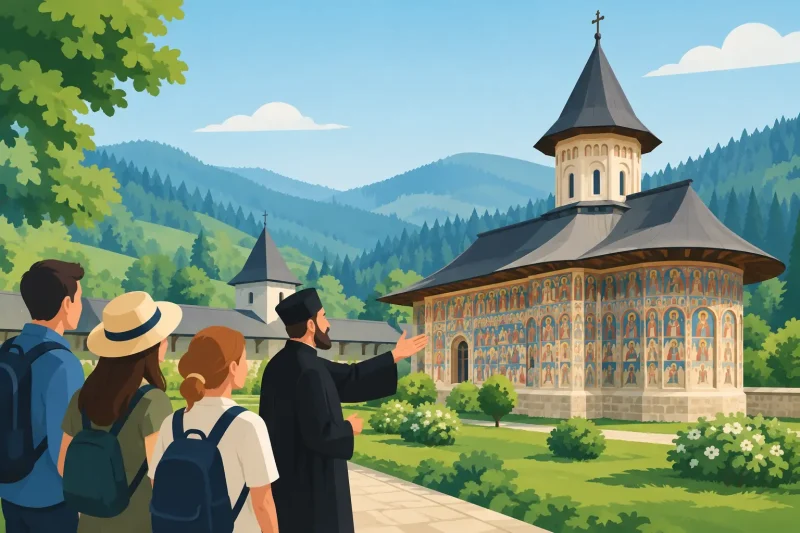
A day tour is most rewarding when there is time to look closely. The scenes painted on the walls are not decorative backgrounds. They tell biblical stories for a medieval public, using striking images, color, and narrative movement. A local guide can explain what you are seeing, from the Ladder of Divine Ascent at Sucevița to the Siege of Constantinople at Moldovița, without making the visit feel like a lecture.
A Well-Paced Route Through the Painted Monasteries
The best itinerary depends on your starting point, the season, and how deeply you wish to explore. From Suceava, a classic full-day route can include Voroneț, Humor, Moldovița, and Sucevița. These monasteries are spread across western Bucovina, so transport and timing matter as much as the list of sites.
Begin with Humor and Voroneț
Humor Monastery is often an excellent first stop because it introduces the visual language of Bucovina’s painted churches in a calm, compact setting. Its red-toned frescoes and carefully preserved scenes offer a strong contrast to the blue that awaits at Voroneț.
Voroneț Monastery is the stop many visitors know by name, and it deserves more than a brief photo break. Founded by Stephen the Great in 1488, it is sometimes called the “Sistine Chapel of the East,” though the comparison only goes so far. Voroneț belongs unmistakably to Bucovina: its painted exterior, steep roof, and mountain setting create an atmosphere found nowhere else.
Between these visits, the road itself becomes part of the experience. Bucovina is not a collection of monuments in one town. It is a cultural landscape, where monasteries, homes, hayfields, roadside crosses, and forested slopes still belong to the same visual world.
Continue to Moldovița and Sucevița
Moldovița Monastery rewards visitors with both scale and detail. Built in 1532 by Petru Rareș, it is known for monumental yellow-gold murals and the remarkable depiction of the Siege of Constantinople. The paintings carry theological meaning, but they also offer a window into the fears, hopes, and political imagination of 16th-century Moldavia.
Sucevița makes a fitting final major stop. Its fortified walls give it a distinct presence, and the murals remain among the most refined in the region. The famous Ladder of Divine Ascent is especially compelling: angels help the righteous upward while demons attempt to pull others away. Even visitors with no background in Orthodox art can read the drama of the scene.
Trying to add too many monasteries to this route can reduce the quality of the day. Putna, Arbore, Dragomirna, and Pătrăuți are all worthwhile, but they work best on a different route, an extended itinerary, or a private program designed around your interests. Bucovina deserves attention, not a rushed checklist.
More Than Frescoes: The Bucovina Between Stops
The space between monasteries is one reason to travel with someone who knows the region. A good day may include a traditional lunch in a local setting, a brief stop at a pottery workshop, or time to browse handmade textiles and painted eggs. These are not compulsory additions, and they should never distract from the monasteries themselves. Yet for many travelers, they make the heritage feel connected to everyday life.
Food also has its place in the rhythm of the journey. A meal of local soups, cheese, sarmale, or seasonal dishes offers a practical pause after several cultural visits. Vegetarian preferences and other dietary needs can usually be planned in advance, especially on a private tour.
In spring and summer, the villages are bright and active, with gardens, haymaking, and long daylight hours. Autumn brings rich color to the hills and a quieter mood. Winter can be deeply atmospheric, particularly when snow settles around the monasteries, but roads, daylight, and weather require a more flexible schedule. The most beautiful season depends on what you value: light and activity, autumn color, or the stillness of winter.
Why Guided Transport Changes the Day
Independent travel is possible, but it has trade-offs. The monasteries are dispersed, public transportation is not always convenient for a multi-stop cultural route, and parking or opening schedules can vary. Renting a car gives flexibility, yet it also means navigating unfamiliar local roads while trying to make sense of sites that deserve your full attention.
A guided day tour brings the route, driving, and cultural interpretation together. You can watch the landscape rather than the map, arrive with a realistic sequence of visits, and adjust the pace when one monastery captures your attention. This is particularly helpful for couples, families, and small groups who want comfort without the impersonality of a large coach excursion.
With a local guide-driver, the day can be shaped around your priorities. Some travelers want the UNESCO highlights and a traditional lunch. Others are interested in architecture, iconography, photography, or the story of Stephen the Great and Petru Rareș. A family may prefer shorter visits and a gentler rhythm. There is no single perfect itinerary, but there is a better itinerary for your interests.
AXA Travel organizes private and small-group experiences from Suceava with local licensed guidance and comfortable transport. The advantage is not merely getting from one monastery to another. It is having the freedom to ask questions, pause where the landscape is beautiful, and let the day reflect the way you prefer to travel.
Practical Details for a Respectful Visit
The monasteries are active religious places, so modest clothing is appropriate. Shoulders and knees should be covered, and women may be asked to use a head covering at certain sites. Bring a light layer even in warm weather, as church interiors can feel cool.
Photography rules differ from one monastery to another. Exterior photography is usually straightforward, while indoor photography may be restricted or require a fee. Your guide can help clarify the current practice, but it is always best to follow posted rules and respect worshippers.
Plan for a full day rather than a few hurried hours. Comfortable shoes are useful for courtyards, uneven paths, and village stops. Carry water, especially in summer, and keep some room in your schedule for the unexpected: a local festival, a changing weather pattern, or simply the desire to stay longer in a place that moves you.
Let the Route Reflect Your Curiosity
A Bucovina monasteries day can be the centerpiece of a short stay in northern Romania or the beginning of a longer regional journey. It can be paired with the Rarău Mountains, a ride on the Mocănița steam train, museums, or further travel toward the historic city of Chernivtsi when conditions and border arrangements allow.
The most memorable visit is rarely the one with the most stops. It is the one that leaves you with a clear image: blue frescoes in the afternoon light, the sound of bells across a village, or a story that turns an old painted wall into something personal. Give Bucovina the time to speak, and one day can stay with you long after the road back to Suceava.