
Bucovina Monasteries UNESCO Sites to See
07/09/2026
7 Top Painted Monasteries in Romania to Visit
10/09/2026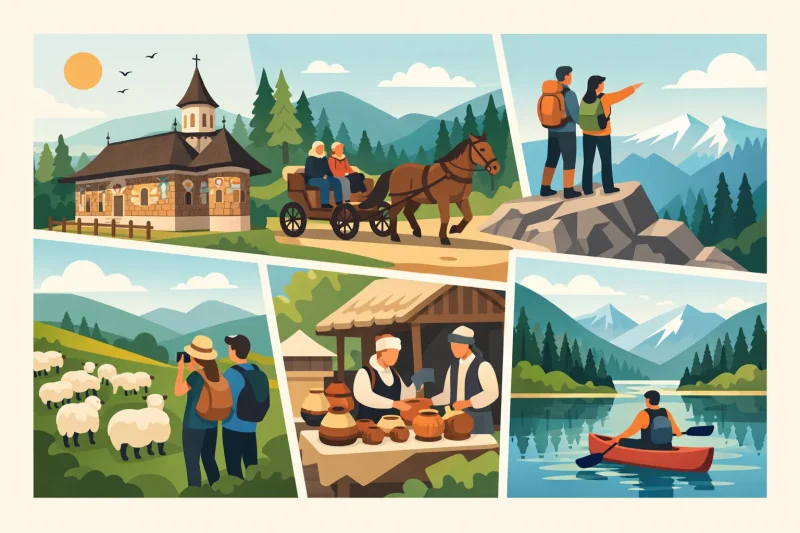
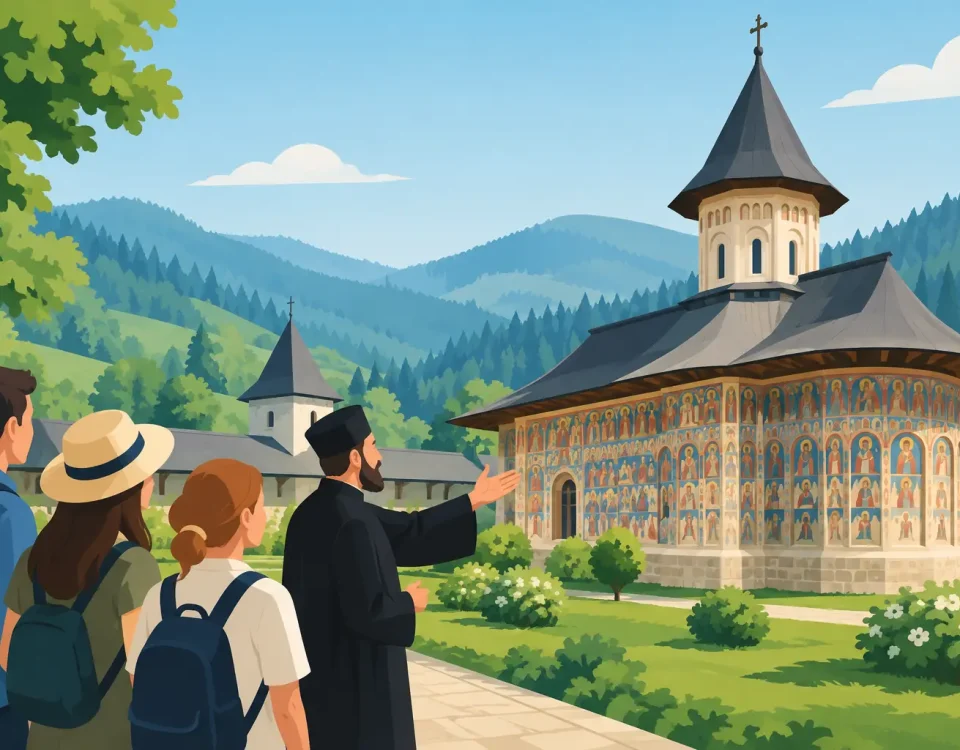
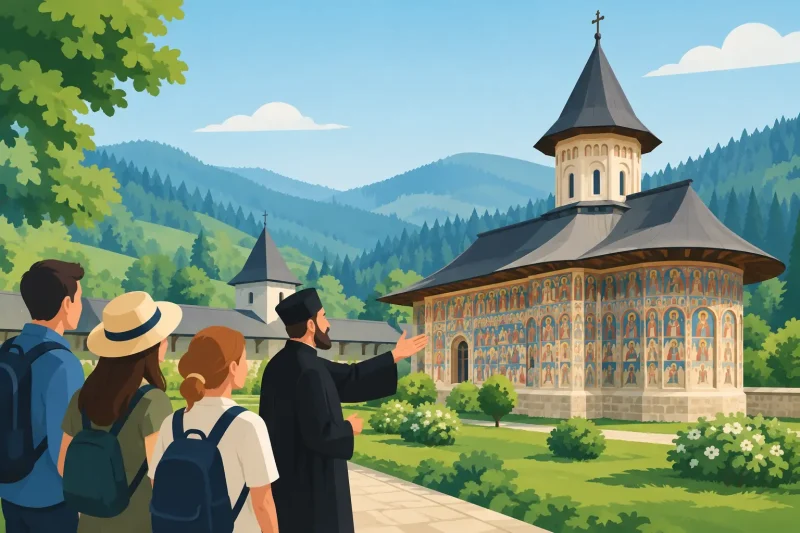
The painted walls of Voroneț are unforgettable, but the way you reach them changes the experience. These custom tour examples show how a visit to Bucovina can be shaped around your available time, cultural interests, travel style, and preferred pace. Instead of following a fixed bus schedule, you can spend longer where a story, a landscape, or a quiet monastery courtyard invites you to stay.
Bucovina is compact enough for rewarding day trips, yet rich enough to fill several days with different themes. The painted monasteries are spread across valleys and villages, mountain roads lead toward Rarău, and traditional places often sit beyond the routes most independent visitors would easily find. A private itinerary makes those connections practical, with a licensed local guide-driver and comfortable transportation from Suceava, Gura Humorului, or another agreed departure point.
Custom Tour Examples for Every Type of Traveler
1. A first day among the painted monasteries
For travelers visiting Bucovina for the first time, a full-day route can focus on the monasteries that best introduce the region’s UNESCO heritage: Voroneț, Humor, Moldovița, and Sucevița. Each has its own architectural character, colors, and painted scenes, so the day does not feel like a repetition of the same stop.
At Voroneț, the deep blue exterior frescoes and the famous Last Judgment scene offer a powerful first encounter. Humor brings a more intimate atmosphere and warm red tones, while Moldovița adds a beautiful rural setting and richly detailed paintings. Sucevița, protected by strong walls and known for its green-dominated frescoes, gives the route a memorable finale.
This itinerary works especially well for couples, families, and visitors with one complete day in the area. A customized version may include a traditional lunch, a short stop at a local museum, or time for photographs in the villages between the monasteries. The trade-off is simple: seeing four major sites makes for a full day, so travelers who want deeper interpretation at each monastery may prefer a two-day format.
2. A slow heritage route for art and history lovers
Some visitors come to Bucovina with a specific interest in medieval art, Orthodox architecture, or Romanian history. For them, fewer stops and more context often create a better experience than a long checklist. A private two-day program can include Arbore, Pătrăuți, Humor, Voroneț, Moldovița, and Sucevița, with careful attention to what makes each monument distinct.
Arbore is valued for the elegance of its exterior paintings and its unusual small-scale church plan. Pătrăuți, the oldest of the painted monasteries, opens a different chapter of the story through its historic role and surviving frescoes. With time to compare artistic details, visitors begin to notice how painters used color, movement, saints, battle scenes, and biblical narratives to communicate with communities centuries ago.
This is a strong option for cultural travelers, photographers, architecture enthusiasts, and small groups who appreciate a thoughtful pace. It can also include the Bucovina Village Museum in Suceava or a visit to the Museum of Medieval Art at the Suceava Fortress area, depending on opening hours and the group’s interests. Because some churches have limited interiors or changing visiting conditions, the program should remain flexible rather than promise access that cannot be guaranteed.
3. Putna, Sucevița, and the northern monastic landscape
A custom route centred on Putna and Sucevița is ideal for travellers who want to understand the spiritual and historical heart of northern Moldavia. Putna Monastery is closely connected with Stephen the Great, one of Romania’s defining medieval rulers, whose tomb is found here. The setting feels peaceful and significant even for visitors who are not traveling for religious reasons.
The route can continue through the rolling landscapes of the Putna Valley, with stops at Sucevița and the nearby village of Marginea, known for its black pottery tradition. If time allows, the program may also include the small but striking monastery of Dragomirna on the return toward Suceava. Its tall proportions and fortified enclosure make it very different from the painted monasteries of the western valleys.
This example suits travelers who prefer history connected to place. It is less about covering every UNESCO site in a single day and more about understanding why monasteries became centers of faith, art, defense, memory, and community life. Road times matter here, so a guide can help balance monastery visits with breaks and a relaxed meal.
4. Painted monasteries and Rarău Mountains in one trip
Bucovina offers more than cultural heritage, and a multi-day custom trip can bring together frescoed churches with mountain scenery. One day might be dedicated to Voroneț, Humor, Moldovița, and Sucevița. The following day can lead toward the Rarău Mountains, where dramatic limestone formations, forest roads, and broad views reveal a different side of the region.
The Pietrele Doamnei area is one of the best-known mountain landmarks in Bucovina. Depending on the season, weather, fitness level, and road conditions, a route can include easy viewpoints, a gentle walk, or more active time in the mountains. Travelers who prefer comfort can enjoy the scenery without committing to a demanding hike, while outdoor-minded guests may choose a longer walk with suitable preparation.
This combination is particularly rewarding for couples and families with varied interests. One person may come for UNESCO heritage, another for mountain landscapes, and both can find something meaningful in the same itinerary. Spring through fall usually offers the broadest range of outdoor options, while winter travel requires more flexibility around snow, visibility, and access.
5. A family-friendly Bucovina day with stories and space
Families often enjoy Bucovina most when the schedule leaves room to move, ask questions, and pause for something other than another historic building. A custom family day can pair two or three monasteries with experiences that feel more hands-on, such as a village museum, a craft stop, a local meal, or a scenic drive through the countryside.
Voroneț and Humor are a practical pairing for a shorter day, with enough visual impact to keep younger travelers engaged. The guide can explain the painted scenes as stories rather than a lecture, pointing out angels, animals, saints, and dramatic scenes on the walls. A stop at the Egg Museum in Vama, when it fits the route and the family’s interests, can add color and a clear connection to Bucovina’s Easter traditions.
The best family itinerary depends on ages and energy levels. Families with small children may prefer fewer monasteries and shorter drives. Teenagers and adult children may enjoy adding the Rarău Mountains, a local food experience, or a ride on the Mocănița steam train where scheduling and operating conditions allow.
6. Bucovina and Chernivtsi for travelers drawn to borderland history
For travelers with more time and an interest in the wider cultural region, a customized trip can include a day excursion to Chernivtsi in Ukraine, historically connected to Bukovina. The city offers a different atmosphere: grand civic architecture, Central European influences, literary history, and the striking former Residence of Bukovinian and Dalmatian Metropolitans.
This is not a casual add-on. Border crossing procedures, passport requirements, current security conditions, and transportation timing need to be checked before the itinerary is confirmed. When conditions permit, it can be a meaningful extension for visitors who want to see how Bucovina’s history reaches beyond present-day borders.
How to Shape a Custom Bucovina Tour
A useful starting point is not a list of attractions but a few practical choices: how many days you have, where you are staying, whether painted monasteries are your main priority, and how much driving feels comfortable. From there, the route can be organized around one strong theme or a balanced mix of culture, nature, food, and local traditions.
Private travel gives you choices that standard group tours rarely allow. You can begin later after breakfast, stay longer at a monastery that interests you, request a lunch in a specific area, or build in a transfer to your next destination. It also helps when traveling with grandparents, children, limited mobility, special photography interests, or a group with different expectations.
AXA Travel can help turn these ideas into a realistic route with local timing, licensed guiding, and transportation included. Share your travel dates, group size, accommodation area, and the places that matter most to you. Bucovina is best experienced not as a race between landmarks, but as a region whose stories have time to unfold.