
7 Top Painted Monasteries in Romania to Visit
10/09/2026
Guided Monastery Tours in Bucovina, Romania
16/09/2026
Suceava is not a city to be visited in isolation. Just a few hours from its center, the painted walls of monasteries preserve colors dating back five centuries, mountain roads wind up toward limestone peaks, and villages maintain a rhythm of life defined by craftsmanship, faith, and the forest. The best day trips from Suceava transform your stay into an authentic encounter with Bucovina—without the hassle of wondering where to park, which route to take, or exactly what you are looking at.
For first-time visitors, a single well-planned day can offer a clear and comprehensive picture of the region. For returning travelers, these same roads reveal new details: another monastery, a quieter village church, a mountain lunch, or the sound of the steam locomotive making its way from the village of Moldovița to Argel. The right choice depends on your priorities: UNESCO heritage, scenic landscapes, a family-friendly outing, or an in-depth exploration of local history.
Best Suceava day trips for painted monasteries
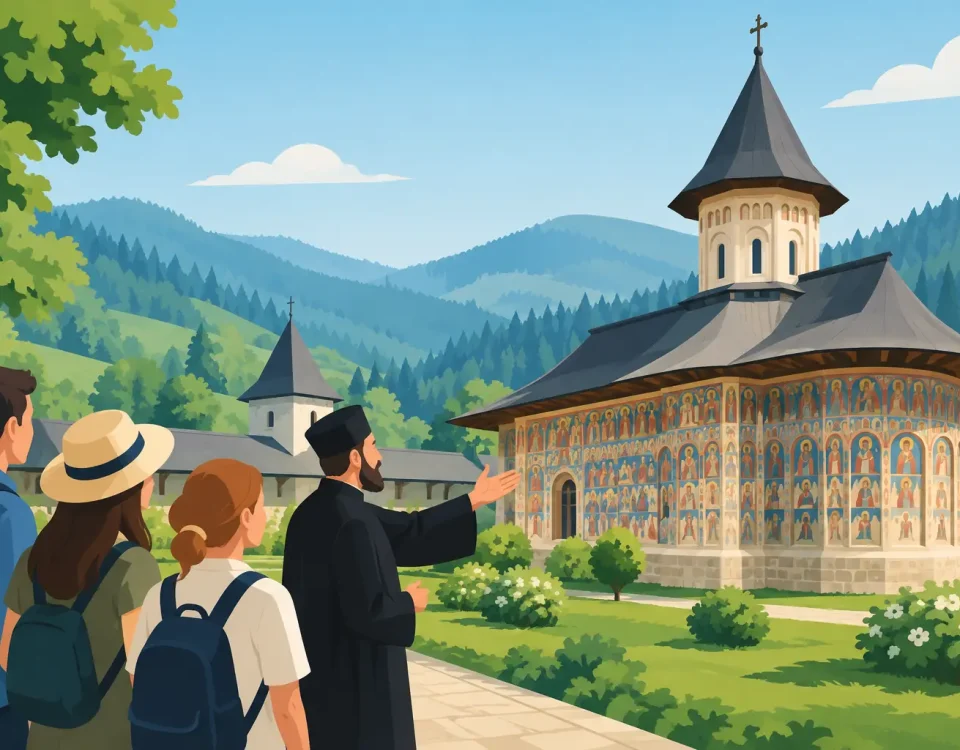
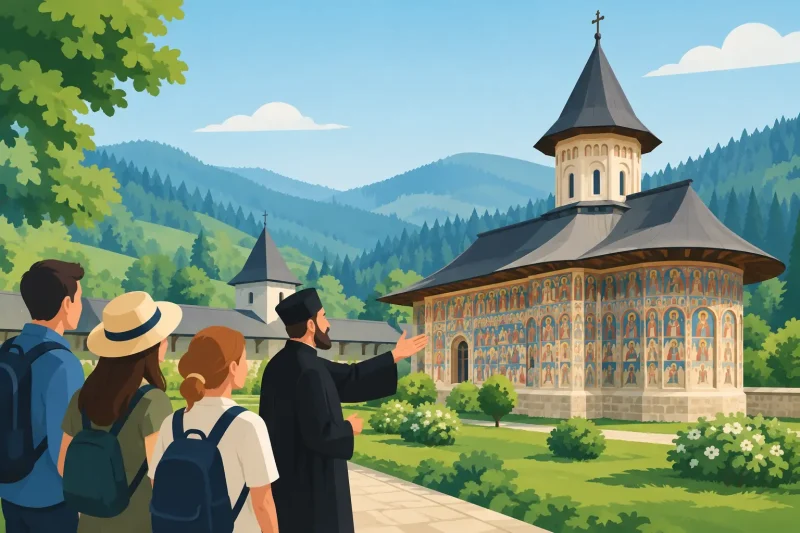
The painted monasteries are the essential Bucovina experience, but they should not be treated as a checklist. Their exterior frescoes were created to tell biblical stories to communities who could not read, and each monastery has its own artistic character, history, and setting. A guided route is particularly valuable here because the stories behind the paintings make the visit far more meaningful than a quick photo stop.
Voroneț, Humor, and Moldovița
A full-day route to Voroneț, Humor, and Moldovița offers an excellent introduction to Bucovina’s UNESCO-listed heritage. Voroneț is famous for its intense blue, often called Voroneț blue, and for its monumental Last Judgment fresco. It is visually immediate, even for visitors with little previous interest in religious art.
Humor Monastery has a warmer, more intimate atmosphere. Its red-toned frescoes and elegant proportions reveal a different side of the same artistic tradition. Moldovița, farther west, combines rich exterior paintings with a striking rural landscape. The road itself becomes part of the experience as Suceava’s urban edges give way to rolling hills and traditional villages.
This is a good option for couples, families, and small groups who want a balanced cultural day. Plan for a relaxed pace rather than trying to add too many stops. Three monasteries, a traditional lunch, and time for photographs are usually more rewarding than rushing through five sites.
Sucevița and Putna
Sucevița and Putna suit travelers interested in both art and the political history of medieval Moldavia. Sucevița is renowned for its exceptionally well-preserved frescoes, especially the Ladder of Divine Ascent, where monks climb toward heaven while demons try to pull them down. The monastery’s fortified walls add another layer to the visit, reminding guests that these were spiritual centers in a contested borderland.
Putna has a different emotional weight. Founded by Stephen the Great, one of Romania’s defining medieval rulers, it is his burial place and an important symbol of Romanian identity. The setting is calm and wooded, inviting a slower visit.
Together, these sites make a longer day from Suceava, but the journey is worthwhile for travelers who prefer historical context over a rapid UNESCO tour. An itinerary can also include a stop in Marginea, a village known for its distinctive black pottery. It is a practical addition when you want to meet a living craft tradition rather than only visit monuments.
Arbore, Dragomirna, and Pătrăuți
Not every memorable monastery day needs to follow the most familiar route. Arbore, Dragomirna, and Pătrăuți offer a more specialized itinerary for travelers who appreciate architecture, art history, and quieter places.
Arbore is compact and graceful, with frescoes that show a more personal visual language than the grand facades of Voroneț or Moldovița. Dragomirna stands out for its tall, narrow church and fortified enclosure, while Pătrăuți is especially significant as the oldest surviving painted church in Romania. These sites work beautifully for repeat visitors and cultural enthusiasts, though they may feel less immediately dramatic for young children or travelers with only one day in Bucovina.
A mountain day in Rarău and Câmpulung Moldovenesc
If painted churches are Bucovina’s cultural signature, the Rarău Mountains are its open-air counterpoint. A day toward Câmpulung Moldovenesc and the Rarău massif trades frescoed walls for forest roads, high viewpoints, and the dramatic Pietrele Doamnei rock formations.
This trip is best for active travelers, photographers, and anyone who wants to see how closely Bucovina’s heritage is tied to its landscape. The mountains change character through the year. Summer is ideal for walking and long views, while autumn brings deep color to the forests. In winter, conditions can be beautiful but demand more careful planning, suitable transport, and flexibility around weather.
The level of activity can be adjusted. Some guests prefer a scenic drive with short walks and a traditional meal in the Câmpulung Moldovenesc area. Others want more time outdoors, with a route designed around hiking ability and daylight. This is one of the clearest examples of why a private day trip can be preferable to a fixed group schedule: the mountain experience should match your pace, not the other way around.
Ride the Mocănița Huțulca steam train from Suceava
A journey on the „Mocănița Huțulca – Moldovița” steam train is another memorable experience in Bucovina, especially for families with children and travellers passionate about industrial heritage. This narrow-gauge railway—one of the last of its kind still operating in Europe—is far more than a mere means of transport. It serves as a gateway to a fascinating world where every kilo-meter traveled reveals natural landscapes of forests and rolling hills dotted with traditional houses, creating the unique tableau that defines Bucovina. The journey is not only picturesque but also deeply moving—an authentic experience that connects you to the roots of local history and traditions.
Starting from Suceava, this makes for a highly rewarding day trip, though it requires an early start. Train schedules and operating conditions vary by season; therefore, the itinerary should be planned around the specific departure time rather than approached as a spontaneous or casual outing. The main attraction is not speed, but rather the opposite: the scent of steam, the slow traverse of the valley, and the sensation of traveling along a railway that seems an integral part of the surrounding landscape.
For visitors with limited time, the choice is simple: opt for the Mocănița for a picturesque and captivating experience, which can be complemented by a visit to Moldovița Monastery.
Chernivtsi: a cross-border cultural day
For travelers who want to understand historic Bucovina beyond Romania’s present border, Chernivtsi in Ukraine offers a distinctive day trip. Once an important Habsburg-era cultural center, the city has an architectural atmosphere unlike Suceava’s monastery villages: broad streets, elegant public buildings, literary history, and the extraordinary former Residence of Bukovinian and Dalmatian Metropolitans.
A Chernivtsi day trip requires more preparation than a domestic excursion. Border crossing times, entry requirements, passport validity, and current travel conditions must all be checked carefully before departure. It is best suited to travelers with flexible schedules and a strong interest in Central European history, Jewish heritage, and the multicultural past of the Bucovina region.
Because conditions can change, this is a trip where local coordination matters. A realistic itinerary should leave room for formalities at the border rather than promising a rigid minute-by-minute program.
How to choose the right Suceava day trip
If this is your first visit to Bucovina, start with Voroneț, Humor, and Moldovița. It is the most complete cultural introduction and works well in nearly every season. Choose Sucevița and Putna when medieval history and the story of Stephen the Great matter most. Select Rarău when you need mountain air and a more active day, and reserve the Mocănița for a full day built around the train itself.
Independent driving is possible, but distances between landmarks can be deceptive on rural and mountain roads. A local guide-driver brings more than transportation: they help shape a route around opening times, explain the art without turning the visit into a lecture, and adjust the day when weather or traffic changes plans. AXA Travel can tailor private and small-group outings around the monasteries, mountain roads, local museums, and the interests that brought you to Bucovina in the first place.
Leave some unplanned space in the day. Bucovina is often remembered not only for a famous blue fresco or a mountain summit, but for the small moments between them: a roadside cross, fresh bread at lunch, a conversation with a local artisan, or a village view that asks you to stay five minutes longer.