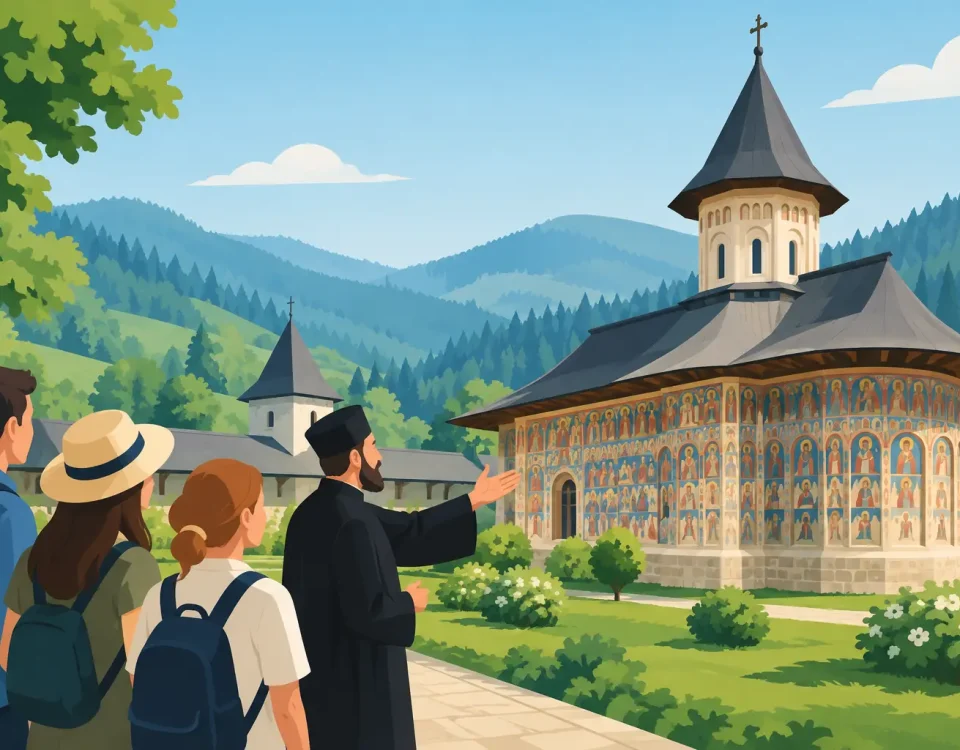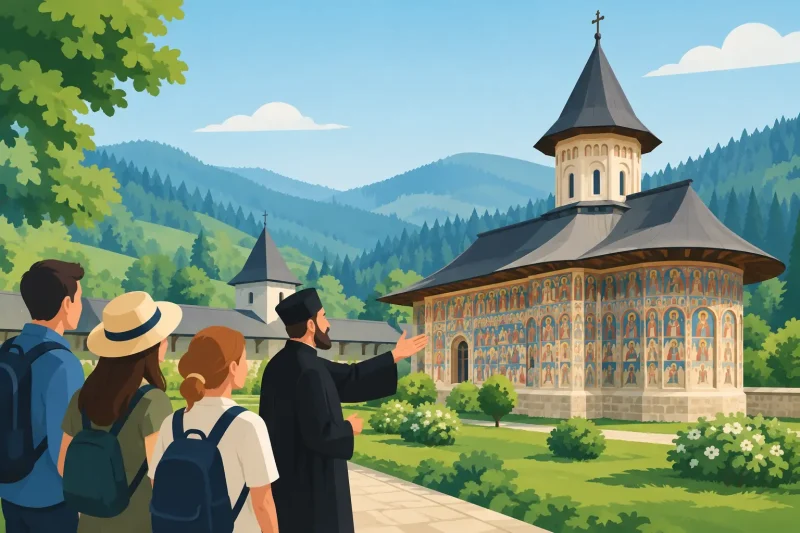

Sucevita Monastery – The Ladder of Divine Ascent
29/08/2026
Painted Monasteries of Bucovina: Christianity in Frescoes
31/08/2026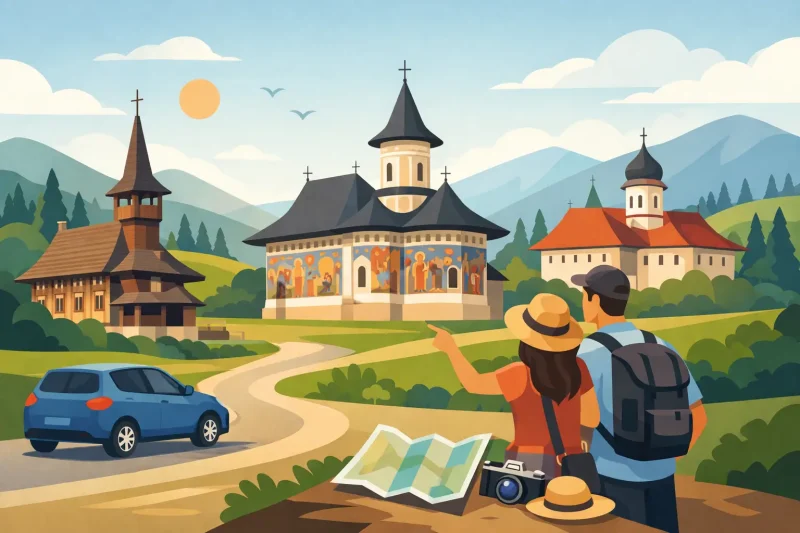
The painted monasteries are not gathered around one town or arranged like a museum collection. They are scattered through valleys, villages, and forested roads in northern Romania. That is exactly why travelers asking how to visit Bucovina monasteries in one day need a route with a clear priority: see fewer places well, rather than spend the day rushing between gates.
A well-planned day can bring you face to face with four remarkable monasteries, including several UNESCO-listed churches, while leaving time for the details that make Bucovina memorable: the deep blue of Voroneț, the humor in Humor’s frescoes, the mountain landscapes on the road to Moldovița, and the quiet dignity of Sucevița.
Can You See the Bucovina Monasteries in One Day?
Yes, provided you start early and choose a logical circuit. Bucovina has more monasteries than can be covered in a single day itinerary. Voroneț, Humor, Moldovița, Sucevița, Putna, Arbore, Dragomirna, Pătrăuți, Probota and the Church of Saint John the New in Suceava each have their own character and history.
Trying to include all of them in a single day turns a cultural journey into a checklist. The most rewarding choice for first-time visitors is a route from Suceava or Gura Humorului that focuses on Humor, Voroneț, Moldovița, and Sucevița. It combines famous painted churches with varied landscapes and keeps driving time realistic.
If Putna is especially important to you because of its association with Stephen the Great, it can be added to a private itinerary. In that case, however, it is usually wiser to remove one of the other stops or accept a longer day. Putna deserves unhurried time, not a ten-minute stop between destinations.
The Best One-Day Route from Suceava
For most visitors, the most practical route is Suceava – Humor – Voroneț – Moldovița – Sucevița – Suceava. Expect a full day of around nine to ten hours, depending on traffic, season, breaks, and how long you spend at each monastery.
Starting from Gura Humorului shortens the first part of the day and makes the itinerary more relaxed. Starting from Suceava is convenient for travelers staying in the city, arriving by train, or combining their monastery tour with the historic Church of Saint John the New on another day.
Morning: Humor and Voroneț
Leave Suceava around 8:00 a.m. and travel first to Humor Monastery. The Church of the Dormition, built in 1530, is known for its warm red-brown exterior frescoes and its narrative scenes. Look for the siege of Constantinople, one of the most striking subjects in Bucovina’s religious art. Humor is often less crowded than Voroneț, making it a wonderful first encounter with the painted churches.
From Humor, Voroneț is a short drive away. Founded in 1488 by Stephen the Great, Voroneț Monastery is the image many travelers associate with Bucovina. Its exterior frescoes include the famous Last Judgment, painted in the intense shade often called Voroneț blue. The color is beautiful, but the story matters just as much: the wall is a richly detailed visual teaching tool, created for a community that learned faith and history through images.
Give each monastery at least 35 to 45 minutes. That allows time to study the frescoes, enter the church where permitted, and walk through the grounds without feeling pushed onward.
Midday: The Road to Moldovița
The journey from Voroneț toward Moldovița is part of the experience. Bucovina’s monastery roads pass through villages where carved wooden gates, haystacks, orchards, and small household gardens remain part of daily life. This is not a route to race through.
Plan a simple lunch near Gura Humorului, Câmpulung Moldovenesc, or along the way, depending on your timing. A traditional meal can fit naturally into the day, but avoid an overly long restaurant stop if your goal is to reach Sucevița before late afternoon. In summer, it is also sensible to carry water and a light snack, especially when traveling with children.
Moldovița Monastery stands in a broad, beautiful valley and is one of the great highlights of the route. Built in 1532, it is celebrated for its golden-toned frescoes and the powerful depiction of the Siege of Constantinople. The exterior paintings feel especially alive here because the church is framed by open countryside and distant hills.
How to Visit Bucovina Monasteries in One Day Without Rushing
The practical secret is not speed. It is choosing a pace that protects your attention. Four monasteries are enough for a meaningful day because the frescoes are dense with detail, symbolism, and regional history. When every stop begins to look the same, it is a sign that the itinerary has become too ambitious.
A local guide can make a major difference, particularly for visitors seeing these churches for the first time. The paintings are not simply decorative facades. They connect Orthodox theology, Moldavian history, medieval politics, and the artistic ambition of the 15th and 16th centuries. Knowing where to look changes the visit. A guide can also adjust the route for weather, seasonal opening patterns, road conditions, and your interests.
For independent travelers, a rental car offers flexibility, but the distances should be taken seriously. Rural roads are scenic and generally manageable, yet they require concentration, especially after dark or in winter. Public transportation is not a practical way to link several monasteries in one day. A guided driver itinerary is often the more comfortable option for couples, families, and small groups who want to look out the window instead of at a navigation app.
Afternoon: Sucevița and the Return to Suceava
From Moldovița, continue to Sucevița Monastery. The road is scenic, and Sucevițan itself has a distinctive atmosphere, enclosed by defensive walls and surrounded by green slopes. Its Church of the Resurrection dates from the late 16th century and is famous for the Ladder of Divine Ascent, a vivid fresco showing souls climbing toward heaven while demons attempt to pull them away.
Sucevița is often the final major stop on a one-day circuit because it offers a fitting contrast to Voroneț. Voroneț is iconic and dramatic; Sucevița feels more enclosed, contemplative, and complete as a monastic setting. If the day has gone smoothly, allow 45 minutes to an hour here before returning to Suceava.
The drive back is a good moment to let the day settle. You will have seen more than beautiful churches: you will have traveled through the former principality of Moldavia, where painted walls carried messages of faith, identity, and endurance across centuries.
What to Wear and What to Know Before You Go
These are living Orthodox monasteries, not only historic monuments. Modest clothing is the respectful choice. Shoulders and knees should be covered, and women may wish to carry a light scarf for church interiors. Comfortable walking shoes are useful because paths can be uneven, wet, or snowy depending on the season.
Photography rules vary by monastery and may be stricter inside churches. Always check before taking pictures, avoid flash, and keep voices low. A small cash amount is helpful for entrance fees, candles, local crafts, or a donation, though exact arrangements can change.
The best months for this itinerary are generally late spring through early fall, when daylight is long and mountain roads are at their easiest. Autumn brings beautiful color and fewer visitors. Winter has a special stillness, but shorter days and snow can make a four-monastery route less predictable. In winter, three carefully chosen stops may be the better plan.
Choose the Route That Matches Your Interests
A first visit should usually center on the classic painted monasteries. Returning travelers can take a more thematic approach. Add Putna for the legacy of Stephen the Great, Arbore for its intimate church and unusual exterior paintings, or Dragomirna for its elegant architecture near Suceava. Pătrăuți, the oldest surviving painted church in the region, is especially meaningful for travelers interested in early Moldavian art.
AXA Travel can organize a private one-day monastery route with local licensed guidance and comfortable transportation, shaping the pace around your starting point, interests, and available time.
Leave a little room in the day for an unplanned pause: a view over a valley, a village gate, the sound of bells, or a quiet moment in a monastery courtyard. Bucovina is best remembered not by how many places you managed to enter, but by the stories and colors that stay with you after the road home.